
Get Started!

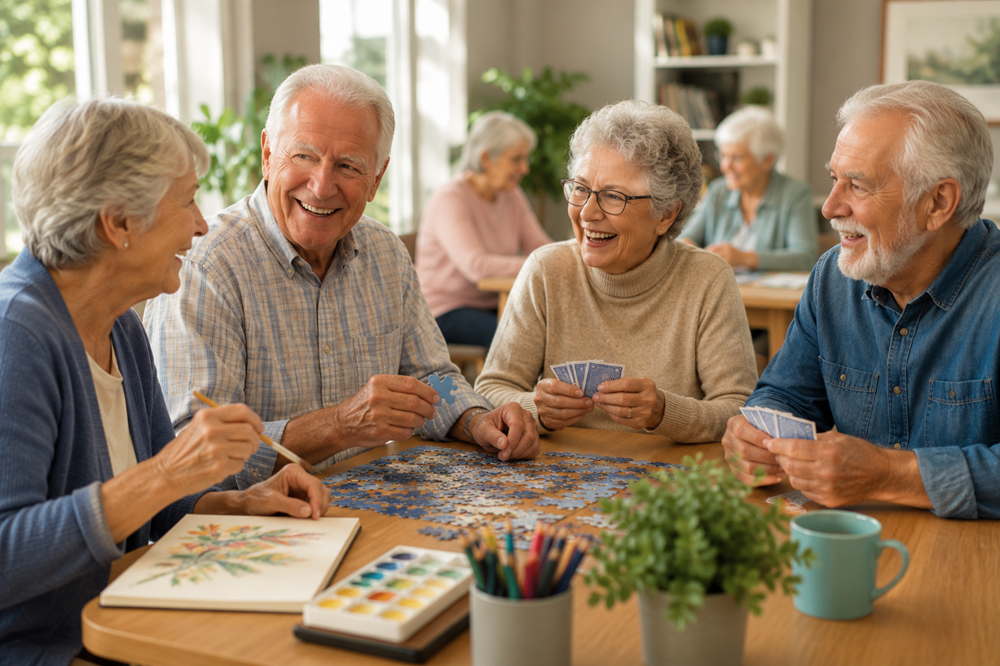
Meaningful social engagement can play a key role in supporting memory, cognitive health, and emotional wellness as people age. This blog explores how meaningful activities such as memory games, storytelling, music, gentle exercise, and dementia-friendly routines can support brain health while promoting independence. You’ll also learn why consistent social engagement matters, how families can create a simple wellness routine at home, and the important role professional home care services play in keeping seniors mentally active, connected, and thriving.
Staying socially active is one of the most powerful ways older adults can protect their memory and overall mental wellness. As families search for reliable home care services to support aging loved ones, many are discovering that consistent social engagement is just as important as physical health when it comes to healthy aging. At Your Side Home Care believes that meaningful connection is a core part of quality care, not an afterthought.
Research consistently shows that isolation accelerates cognitive decline, while regular social interaction helps preserve brain function, mood, and independence. For families across the United States searching for trustworthy home care services, understanding which activities genuinely support senior brain health can make all the difference in a loved one’s quality of life.
Loneliness is more than an emotional challenge. Studies link chronic isolation to a higher risk of dementia, depression, and even cardiovascular disease. Conversely, seniors who maintain active social lives tend to show slower rates of memory decline and greater resilience against stress.
This is why professional in-home care services increasingly emphasize companionship alongside personal care tasks. A caregiver who engages a client in conversation, games, or shared hobbies is doing far more than passing time together. They are actively supporting long-term senior brain health.
When seniors stay mentally engaged, they’re better able to manage daily tasks, remember medications, and make sound decisions. This directly supports the level of independence that families hope to preserve for their aging parents or spouses.
Below are some of the most effective brain health activities for seniors that caregivers and families can incorporate into daily routines.
Simple memory games for seniors, such as matching cards, crossword puzzles, and jigsaw puzzles, stimulate multiple areas of the brain at once. These activities are easy to adapt for different cognitive levels, making them ideal for seniors at any stage of aging, including those with mild memory concerns.
Reminiscing about past experiences engages long-term memory while strengthening emotional bonds. Encouraging seniors to share stories with family, friends, or a compassionate caregiver keeps communication skills sharp and provides a comforting sense of purpose.
Listening to familiar songs or playing simple instruments can be especially powerful. Music therapy has shown remarkable results even in advanced stages of cognitive decline, often reaching clients when other communication methods no longer work.
For clients living with memory loss, dementia-friendly activities should be simple, repetitive, and low-pressure. Sorting objects, folding towels, or arranging flowers can provide a calming sense of accomplishment without the frustration that comes from more complex tasks.
Group stretching, chair yoga, or a short walk with a caregiver combines the cognitive benefits of social interaction with the physical benefits of movement. This pairing has been shown to be particularly effective for supporting mood and memory together.
For clients with Alzheimer’s, sensory-based activities such as handling textured fabrics, smelling familiar scents, or looking through photo albums can spark recognition and comfort, even when verbal communication becomes difficult.
Not every family has the time or training to consistently provide this level of engagement. That’s where professional, in-home support becomes invaluable. At Your Side Home Care, our caregivers are trained to weave social and cognitive activities naturally into each visit, whether that means a card game after breakfast or a gentle conversation during an afternoon walk.
Because our staff is available 24 hours a day, seven days a week, including holidays, families never have to worry about gaps in care or missed opportunities for connection. Every caregiver is matched thoughtfully to each client, ensuring that activities align with personal interests, abilities, and comfort levels.
Our approach reflects our broader mission: improving quality of life and independence for every client and family we serve. Social engagement is one of the simplest, most enjoyable ways to support that mission every single day.
Consistency matters more than intensity. A short daily routine of conversation, a puzzle, or music can be more beneficial than an occasional big outing. Families working with home care services should ask caregivers to document which activities their loved one enjoys most, then build a simple weekly rhythm around those preferences.
Additionally, involving extended family through video calls or scheduled visits reinforces the social network beyond the caregiver relationship. A well-rounded routine draws on multiple sources of connection: caregivers, family, friends, and community groups where possible.
Protecting senior brain health takes more than good intentions. It requires consistent, thoughtful engagement tailored to each individual’s abilities and interests. Whether through memory games, music, storytelling, or dementia-friendly activities, meaningful social connection can measurably improve mood, cognition, and independence.
Families across the country trust professional home care services to bring this kind of structured, compassionate support into daily life. At Your Side Home Care, we’re committed to helping every client live their best life possible, one meaningful moment of connection at a time. If you’re ready to explore how our team can support your loved one’s mental wellness, we invite you to reach out and start the conversation today.
1. What are the best brain health activities for seniors living alone?
Simple daily habits work best, including phone calls with family, puzzles, listening to music, and short caregiver visits focused on conversation. Consistency is more valuable than variety.
2. How do dementia-friendly activities differ from typical senior activities?
Dementia-friendly activities are simplified, repetitive, and low-pressure. They avoid multi-step instructions and focus on sensory engagement, familiar routines, and success rather than performance.
3. Can memory games for seniors actually slow cognitive decline?
While no activity can stop the progression of dementia, regular mental stimulation through memory games has been associated with slower cognitive decline and improved mood in many seniors.
4. How often should seniors participate in social activities to see benefits?
Daily engagement, even in short 15 to 30 minute increments, tends to produce more consistent benefits than occasional longer sessions.
5. Are Alzheimer’s activities for seniors still helpful in later stages of the disease?
Yes. Sensory-based and music-based activities often remain effective even in advanced stages, providing comfort and moments of connection when verbal communication becomes limited.
6. How can home care services help if my loved one refuses to participate in activities?
Trained caregivers understand how to gently introduce activities, adapt based on mood, and build trust over time so participation feels natural rather than forced.

Each office is independently owned and operated and is an equal opportunity employer. At Your Side operates as At Your Side in the Houston area.

© 2026 At Your Side Franchise Systems, LLC.